
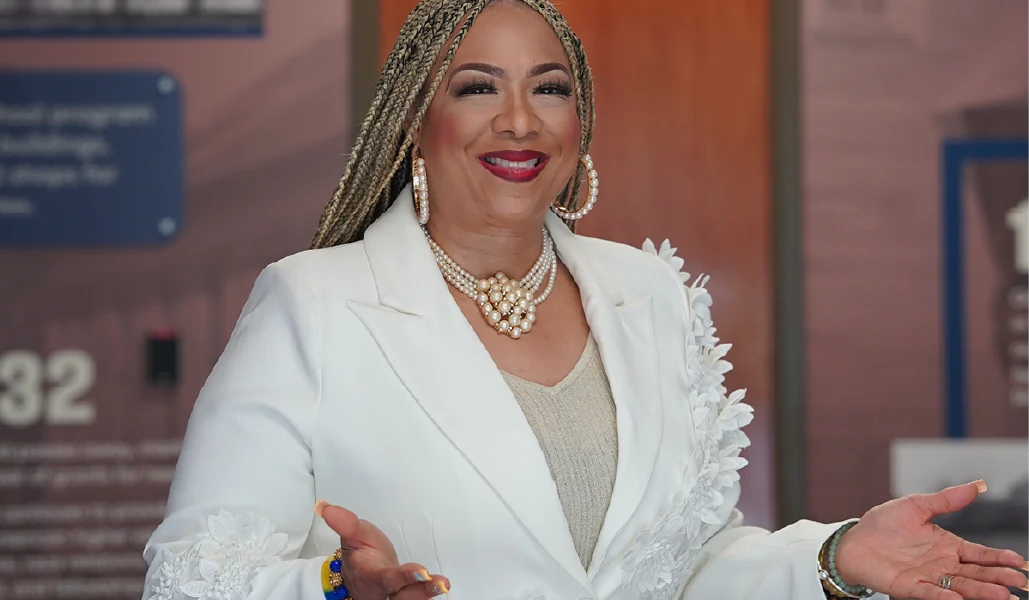
Clayton County’s chairwoman speaks confidently about development, jobs, regional influence and generational wealth. The unanswered question is how—and when—residents will see measurable results.
Clayton County Board of Commissioners Chairwoman Dr. Alieka Anderson-Henry does not speak about the county in small terms. She speaks about transformation, opportunity, economic mobility, regional power and a Clayton County that is no longer willing to accept persistent poverty, limited development or a public reputation shaped by its most difficult years.
The Chairwoman describes Clayton County as “where the world lands and opportunity takes off,” connecting the county’s identity to Hartsfield-Jackson Atlanta International Airport and to the larger promise of what that location should mean for residents.
During a recent interview with We Are Clayton Magazine, Anderson-Henry spoke confidently about stronger regional relationships, mixed-use development, workforce opportunities, public safety, new revenue and generational wealth. Her vision is expansive and deeply personal. What remains less clear is how that vision will become measurable change for the people who live, work and own businesses in Clayton County.
From the Classroom to County Leadership
Anderson-Henry’s path to the chairwoman’s office began in education, not county government. She started as a classroom teacher and once imagined becoming a school superintendent. She earned a bachelor’s degree and continued her education through a master’s degree, an education specialist degree and a doctorate.
“The children is where I started from,” Anderson-Henry said while describing her progression from educator to elected official.
Serving on the Clayton County Board of Education exposed her to the political realities of public leadership while increasing her desire to do more for the county as a whole. She spoke about helping oversee a school system of approximately 55,000 students, participating in the hiring of superintendents and serving while the district was rebuilding after losing accreditation. For Anderson-Henry, the school board was where education, public policy and political responsibility began to intersect. It also became the beginning of a larger ambition to move Clayton County forward.
A Culture of Achievement
Anderson-Henry grew up in southwest Atlanta and attended Benjamin E. Mays High School during a period when Black political, professional and educational leadership was highly visible throughout the city. She described growing up around people who expected young Black students to achieve, continue their education and make something of their lives. In her parent’s household, there was no expectation that a young person would finish school and simply do nothing. College, technical education, military service or employment were the acceptable paths.
Education was deeply rooted in her family. Her grandfather was a doctor, her grandmother was a nurse and members of her family helped relatives attend institutions such as Morris Brown College. Anderson-Henry remembers being surrounded by examples of Black success and public service. She recalled Andrew Young visiting her elementary school and Shirley Franklin living in her neighborhood. Those experiences helped create what she described as a culture of greatness, competition and shared ambition—one in which students were taught to see themselves as people who could lead and accept responsibility for their communities.
That upbringing helps explain the way Anderson-Henry communicates today. Her language is motivational, often spiritual and consistently centered on overcoming limits. She does not separate her personal story from her public role. She presents the distance between where she began and where she is now as evidence that other people can also move beyond the expectations placed upon them.
The Decision to Enter Public Office
Chairwoman, Dr. Anderson-Henry moved to Clayton County during a period when she was rebuilding her own life. She had returned to her mother’s home, was raising her son as a single mother and was working toward professional certification. She expected to
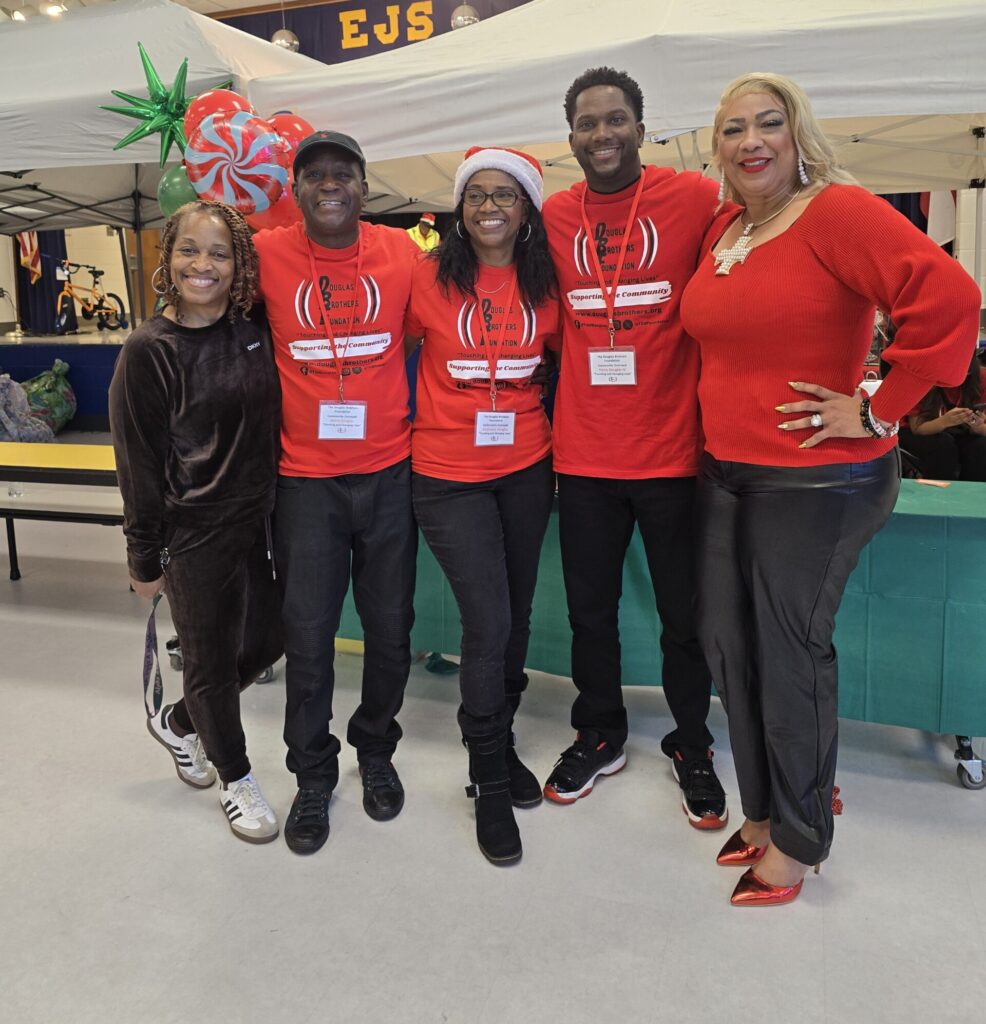
remain there for several years, but eventually found a house in Ellenwood and purchased her first home in her early 30s.
She was teaching in DeKalb County when reports about Clayton County’s school accreditation problems began appearing.
Anderson-Henry recalled sitting at her desk, reading about the district and deciding that she needed to run for the school board.
“I think I’m going to run for school board,” she remembered telling her principal. “There are some things going on in Clayton County.”
She believed her experience as an educator and her willingness to lead could help the district move through the crisis. She ran, won and entered public office.
Anderson-Henry emphasizes that her progression did not happen overnight. She began as a teacher, continued her education, entered school-board leadership, became a county commissioner and eventually became chairwoman. “I worked my way up,” she said. “Things aren’t just given to you.”
The Meaning of Being First
Anderson-Henry is the first woman and the first Black woman to serve as chair of the Clayton County Board of Commissioners.
She said the significance of that achievement extends beyond her own career.
“It means to me that all Black and brown girls can see that you can have, do and be anything you want,” she said.
She wants young people—particularly Black and brown girls—to see that leadership at the highest level of county government is possible for them. She also wants Black men to understand that her leadership is not a rejection of them, but a commitment to serving the entire community. Her answer focused less on public policy than on representation, self-belief and refusing to allow rejection or opposition to determine a person’s future. That distinction continued throughout the interview.
Anderson-Henry was most precise when speaking about her identity, values and governing philosophy. She was less specific when asked how residents would be able to measure the progress of her administration.
Check out the video interview. Click here.
Communication, Collaboration and Consistency
Anderson-Henry repeatedly returned to what she calls the “three C’s”: communication, collaboration and consistency.
In her view, Clayton County has too often been held back by broken relationships, political disagreements and leaders who were unwilling or unable to work with people outside their immediate circles.
“Everybody can sit around and make excuses and say, ‘I don’t get along with this person. I don’t get along with that person,’” she said. “But guess what that does? That holds the people back.”
Anderson-Henry said her role requires communication with airport leaders, neighboring jurisdictions, the Atlanta Regional Commission, Aerotropolis Atlanta, Clayton County’s cities, nonprofit organizations and other public officials.
She sees those relationships as the foundation of the county’s next stage of growth.
She also said she plans to establish a chairwoman’s advisory board to bring more people into the conversation and strengthen communication between county government, residents and regional partners.
However, she did not explain when the advisory board will begin, how its members will be selected, what authority it will possess or whether its recommendations and meetings will be accessible to the public.
The Airport Advantage—and the Missing Details
Hartsfield-Jackson Atlanta International Airport remains central to Anderson-Henry’s vision for Clayton County.
The county’s proximity to the airport is one of its most powerful geographic advantages. Residents, however, have heard that argument for years.
The more difficult question is how that advantage will create jobs, contracts, transportation access and higher household incomes for the people who already live in Clayton County.
When asked how residents would feel the practical impact of stronger airport relationships, Anderson-Henry returned to collaboration.
She said she intends to sit down with regional leaders, explain Clayton County’s needs and insist that the county be included in opportunities generated by the airport and the broader metro Atlanta economy.
“When I go in and I build these relationships, I tell them the story of our county,” she said. “I tell them where we are, where we need to go, and then I ask them how they can work with me to get us there.”
What she did not identify was a specific airport employment agreement, local hiring target, contracting initiative, apprenticeship program or transportation project that would directly connect residents to airport-related opportunities.
Her answer established that she believes relationships are necessary.
It did not establish what those relationships have already produced or what residents should expect them to produce next.
Mixed-Use Development and New Revenue
Anderson-Henry was more specific about the type of development she wants to see within Clayton County.
She believes the county must generate more revenue through commercial growth and sales taxes rather than continuing to depend so heavily on residential property owners.
She pointed to communities such as Alpharetta, where mixed-use developments combine housing, restaurants, retail, entertainment and public spaces.
Because Clayton County is largely built out, she said, future growth must increasingly move upward instead of outward.
“Clayton County is very landlocked,” Anderson-Henry said. “So now it’s time for us to go up.”
Her vision includes condominiums or apartments built above restaurants, grocery stores, beauty shops, dry cleaners, pharmacies and other neighborhood businesses.
She also discussed walking trails, connections to regional trail systems and communities where residents can live, work, shop, eat and enjoy entertainment without leaving the county.
She connected these ideas to small-business development and the need for more full-service grocery stores in communities such as Conley and Forest Park.
The economic argument is straightforward: new development creates places where people spend money, and that spending generates sales-tax revenue.
More commercial revenue could reduce some of the pressure on homeowners and provide the county with greater financial flexibility.
“We can’t depend on our residents’ taxes anymore,” Anderson-Henry said. “We’ve got to be creative.”
The unanswered questions involve execution.
Anderson-Henry did not identify a specific mixed-use project that is fully funded and ready to begin. She did not name developers, construction schedules or agreements currently before the Board of Commissioners.
Her response described the kind of community she wants Clayton County to become.
It did not establish how far the county has moved from vision to implementation.
The Arena at Southlake
Anderson-Henry pointed to the Arena at Southlake as an example of an ambitious idea becoming real.
She said the concept began during her time on the Clayton County Board of Education, when board members were discussing the need for a venue large enough to accommodate school graduations.
She recalled asking district leaders to consider the former Sears building at Southlake Mall and imagining a facility that could host graduations, concerts, conventions and major community events.
Anderson-Henry also believed an arena could help stabilize Southlake Mall as traditional malls across the country lost stores and customers.
An arena, she argued, could create new traffic, support restaurants and hotels and give visitors another reason to spend money in Clayton County.
The county later contributed $10 million to the project. Anderson-Henry said the county has access to a limited number of days when it can use the venue for events and potentially generate revenue.
“We’ve got to continue to bring in sales-tax dollars,” she said.
The arena may become an important economic anchor. Its long-term impac
t, however, will depend on how often it is used, which events it attracts, whether supporting businesses materialize and how much new revenue it generates.
Residents will need clear and continuing information about its financial performance and broader economic effect.
Poverty, Employment and Economic Mobility
Poverty and economic mobility were among the issues Anderson-Henry discussed with the greatest urgency.
She said she would not accept Clayton County’s poverty rate, limited educational attainment or the number of residents without high school credentials as permanent conditions.
Her proposed solutions included trade schools, commercial driving programs, grant-funded workforce training, nonprofit partnerships and a stronger expectation that businesses investing in Clayton County employ Clayton County residents.
“You’re coming in, you’re investing into this county, and you need to be giving jobs to the people in this county,” she said.
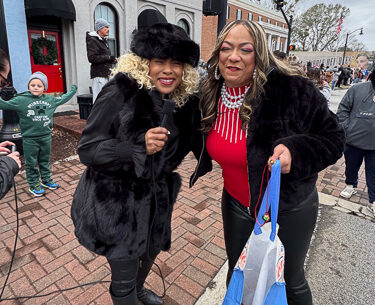
She also spoke about discipline, employment and family responsibility as parts of the solution.
In Anderson-Henry’s view, county government can help create opportunities, but residents must also be prepared to take advantage of them.
Her response established a clear belief that economic development should benefit residents—not simply increase property values or attract outside investors.
It did not establish a local hiring requirement, poverty-reduction target, workforce enrollment goal or timeline for determining whether the county’s economic-development strategy is improving household income.
Public Safety and Mental Health
On public safety, Anderson-Henry placed significant emphasis on mental health. She said Clayton County uses mental-health practitioners who ride with law-enforcement officers and described the county’s objective as “decriminalizing mental health.”
“Our police officers have to know how to work with everybody and have to know how to work with people who have mental-health issues,” she said. She argued that officers are increasingly expected to respond to people experiencing psychiatric crises, substance-related conditions and other situations that may require more than a traditional enforcement response.
Anderson-Henry also expressed concern about teenagers having access to firearms and praised efforts to provide gun lockboxes to residents. She described cooperation among the police department, sheriff’s office, fire department and E911 personnel as one of the county’s public-safety strengths. Some of her broader public-safety statements require further examination.
Anderson-Henry said residents do not commonly hear about police brutality or people being shot by police without reason in Clayton County. Those claims cannot be treated as established conclusions without an independent review of use-of-force reports, citizen complaints, disciplinary records, lawsuits and related public records.
A Vision Must Become a Public Plan
By the conclusion of the interview, Anderson-Henry’s message returned to legacy.
She wants to be remembered as a leader who opened doors for future generations, helped create generational wealth and changed Clayton County’s culture.
“What I would like for people to say about me is she paved the way for my generation, the next generation and generations to come,” she said.
Anderson-Henry’s vision for Clayton County is not difficult to understand.
She wants stronger regional relationships, larger development projects, new revenue, more jobs and a greater share of the economic opportunity created by the airport and the metro Atlanta region.
She wants Clayton County to stop being defined by past failures and begin operating with the confidence of a community that understands its value.
What remains less clear is how that vision will be carried out—and how residents will measure the results. The interview revealed who Anderson-Henry believes she is, what shaped her leadership and what she wants Clayton County to become.
It did not fully establish:
- Which projects will move first.
- How those projects will be funded.
- Which developers or regional partners have made firm commitments.
- What deadlines residents should expect.
- What local hiring or contracting goals will be established.
- Which measurable outcomes will define success.
The ambition is unmistakable. The next step must be a public plan that residents can see, follow and evaluate.