

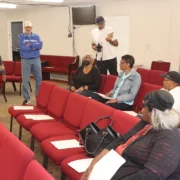





The Momentum 500 program emphasizes education, structure, and execution before capital—preparing small businesses to grow sustainably and responsibly.
IN CONVERSATIONS ABOUT SMALL BUSINESS growth, funding is often treated as the beginning of the story. Capital is positioned as the missing piece—the thing that, once secured, will solve long-standing challenges and unlock momentum. The Momentum 500 program takes a different view. It begins not with money, but with readiness.
Developed through a partnership involving the Clayton County Development Authority and Clayton State University’s Continuing Education division, the Momentum 500 class is designed to prepare business owners before investment ever enters the equation. Its premise is simple but firm: funding works best when it follows structure, not the other way around.
That philosophy is reflected not only in the curriculum, but in the instructors who lead it.
The Expertise Behind the Program
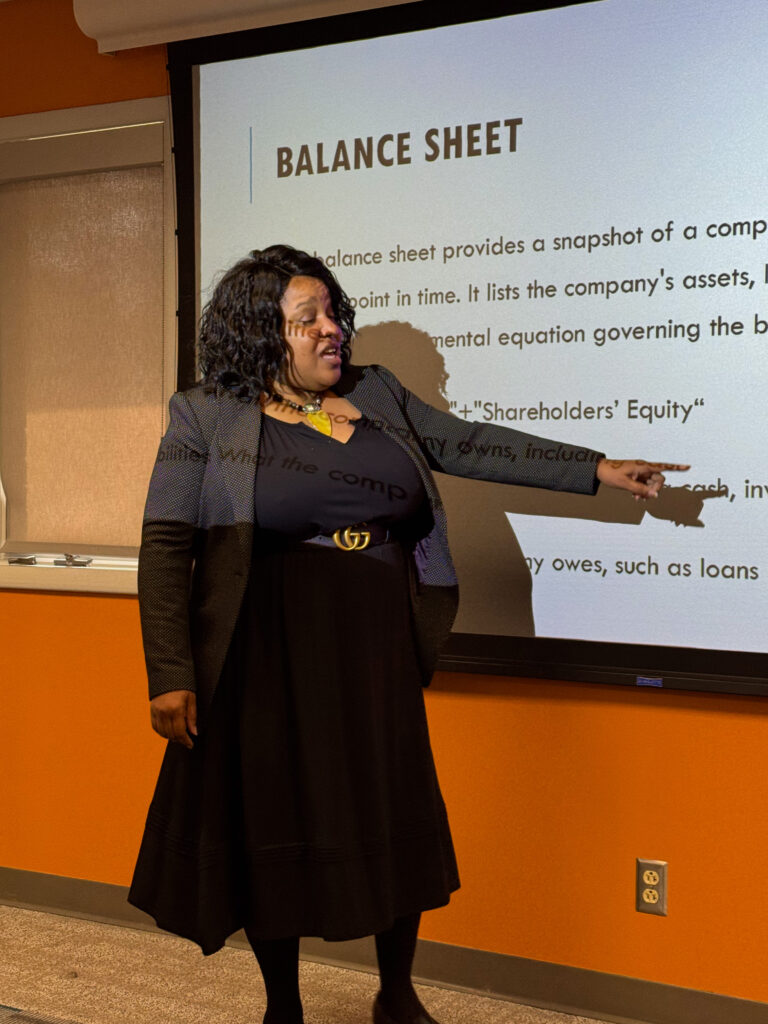
Dr. Mario Norman and Dr. Stacy Reynolds bring decades of real-world experience to the Momentum 500 classroom—experience rooted not only in academia, but in entrepreneurship itself.
Dr. Norman traces his entrepreneurial beginnings back to necessity. When his grandfather fell ill, he and his cousin were suddenly responsible for selling truckloads of watermelon before they spoiled. “We had a finite time to sell it,” he recalled. “Otherwise, it would all go bad.” That early lesson in urgency and operations stayed with him.
Later, entrepreneurship became deeply personal when his wife opened a dental practice. Despite clinical excellence, the business side proved challenging. “Nobody taught them how to run the business,” he said. “You assume that if you’re a dentist, people will come and you’ll make money—but we didn’t understand how much money was going out the door.” The lessons came after the fact, often painfully, but they shaped how he now teaches business owners to anticipate problems rather than react to them.
Dr. Reynolds’ path was similarly shaped by lived experience. With more than 35 years in business, she started early—launching ventures while still in undergraduate school and later working in large corporate environments. Over time, she noticed a recurring pattern. “People aren’t able to thrive. They’re spending a lot of time surviving,” she said. “They’re doing the hard stuff, but not some of the little stuff that could make their businesses more profitable and sustainable.”
That realization led her from corporate leadership and family business into academia, with a clear purpose: to help entrepreneurs build enterprises that last.
What the Momentum 500 Class Teaches
The Momentum 500 program centers on capacity building. Participants are guided through financial readiness, strategic planning, and operational execution—areas that are often glossed over in traditional grant narratives.
Financial literacy is a cornerstone. Business owners are encouraged to examine cash flow, pricing, and cost structures honestly. As Dr. Norman noted, even well-intentioned businesses can struggle when values and viability collide. In the dental practice he and his wife built, generosity sometimes came at the expense of sustainability. “We gave away a lot of services,” he explained. “It went against her values to turn people away, but the business still had to survive.”
Strategy follows closely behind. Rather than pushing rapid growth, the program asks participants to define what sustainable growth actually looks like for their business. It challenges assumptions and replaces them with planning grounded in reality.
Execution is where these ideas are tested. Systems, documentation, and follow-through are treated as essential—not optional. The program emphasizes that good intentions do not replace operational discipline.
What the Instructors Expect From Participants
Momentum 500 is not a passive experience. From the outset, participants are expected to show up, engage, and apply what they are learning.
Dr. Reynolds was candid about her expectations. “You showed up. And you were fully present,” she said of the cohort. “You allowed us the opportunity to bring you new tools—and actually work with them.”
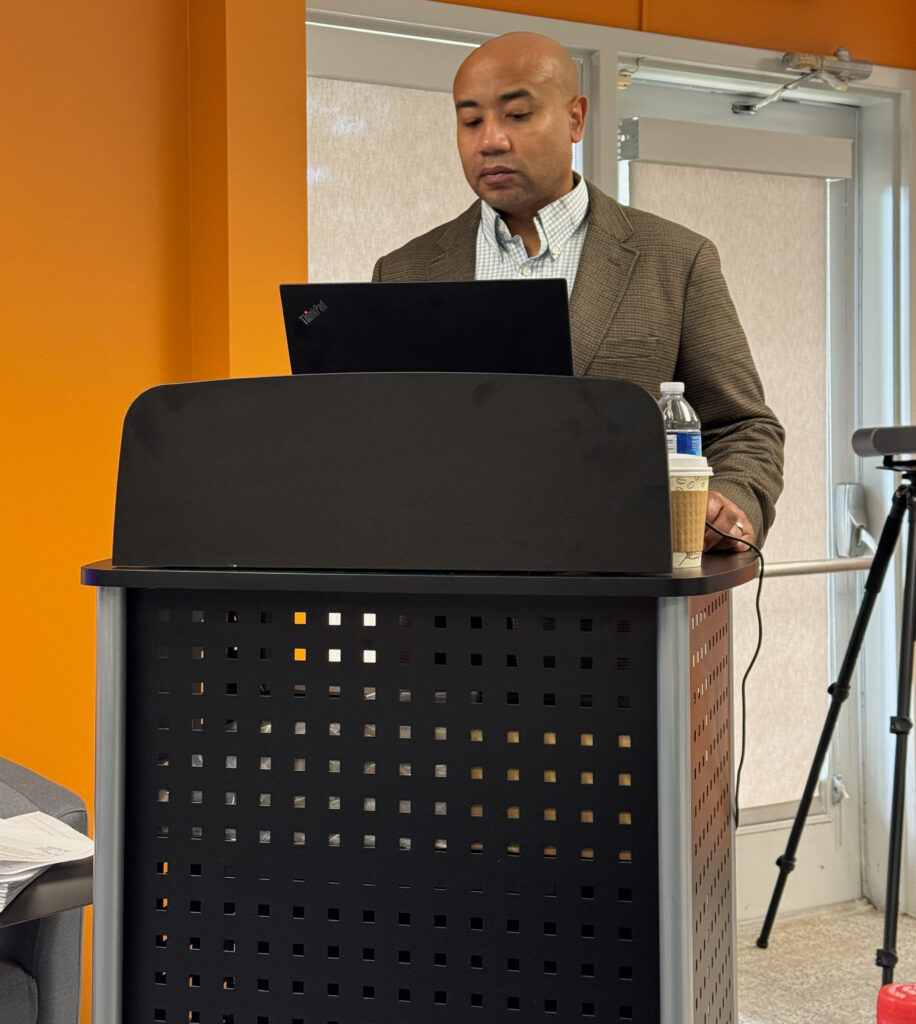
That openness mattered, particularly given the diversity of experience in the room. Some participants had been in business for years and arrived with understandable skepticism. “Often, when people have been in business a long time, they feel like they already know,” Dr. Norman acknowledged. “They’re ready to get back to their business and make money.” The willingness to pause, listen, and engage became one of the program’s most meaningful outcomes.
Why Education Before Investment Matters
A central theme of Momentum 500 is that preparation reduces risk—for businesses and for funders. By emphasizing education first, the program helps prevent premature scaling, mismanaged funds, and burnout.
It also reframes grants as tools rather than solutions. Funding does not replace structure; it amplifies it. When businesses are prepared, capital becomes a lever instead of a lifeline.
Dr. Norman described the reward succinctly: “Seeing the light bulbs go off. If we can share information so you don’t have to fight the same battles, and you become more profitable, that benefits the entire community.”
Dr. Reynolds echoed that sentiment. “We’ve been tested through business and academia. If we can connect those dots and make it better for someone else, then it was worthwhile. It breathes life into entrepreneurs—and into our communities.”
From Classroom to Application
The Momentum 500 program does not end when the class concludes. Its value lies in what participants carry forward: clearer financial practices, stronger systems, and a more realistic understanding of what growth requires.
In a landscape where funding is often emphasized without context, Momentum 500 offers a necessary correction. Readiness is not secondary. It is fundamental.
For small businesses committed to longevity, that lesson may be the most enduring return on investment of all.