
TIME, IT IS SAID, CHANGES EVERYTHING
For a group of south Clayton County residents, the change during their lifetimes has been monumental. From a mostly rural county sprawling with cotton fields and dirt roads governed mostly by white supremacists to an 21st Century urban landscape governed in a large part by African Americans, Clayton has been transformed entirely.
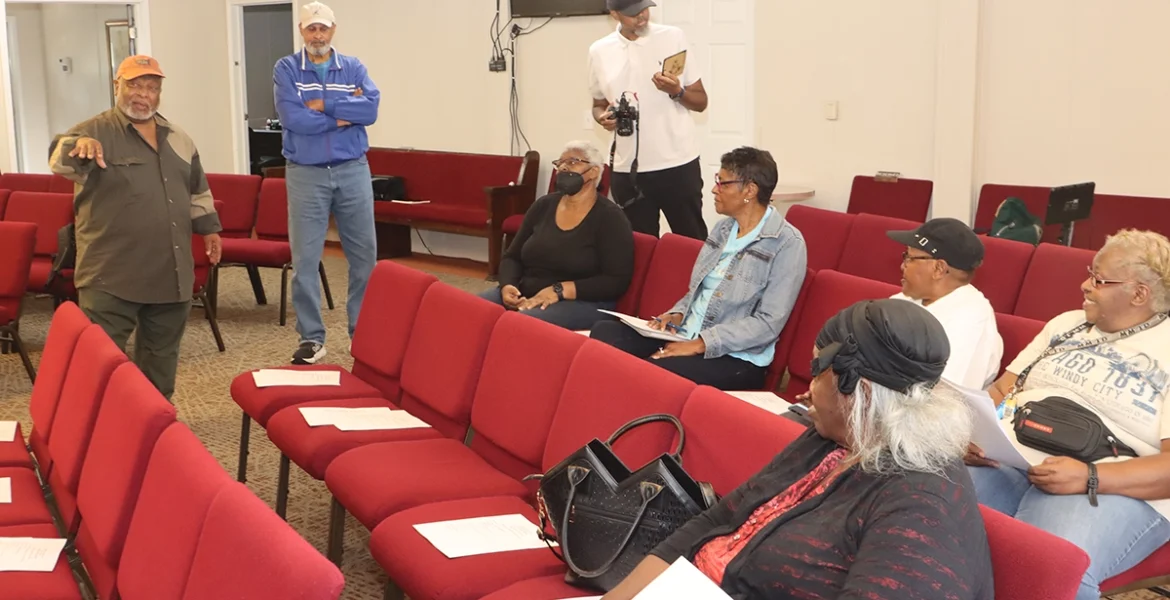
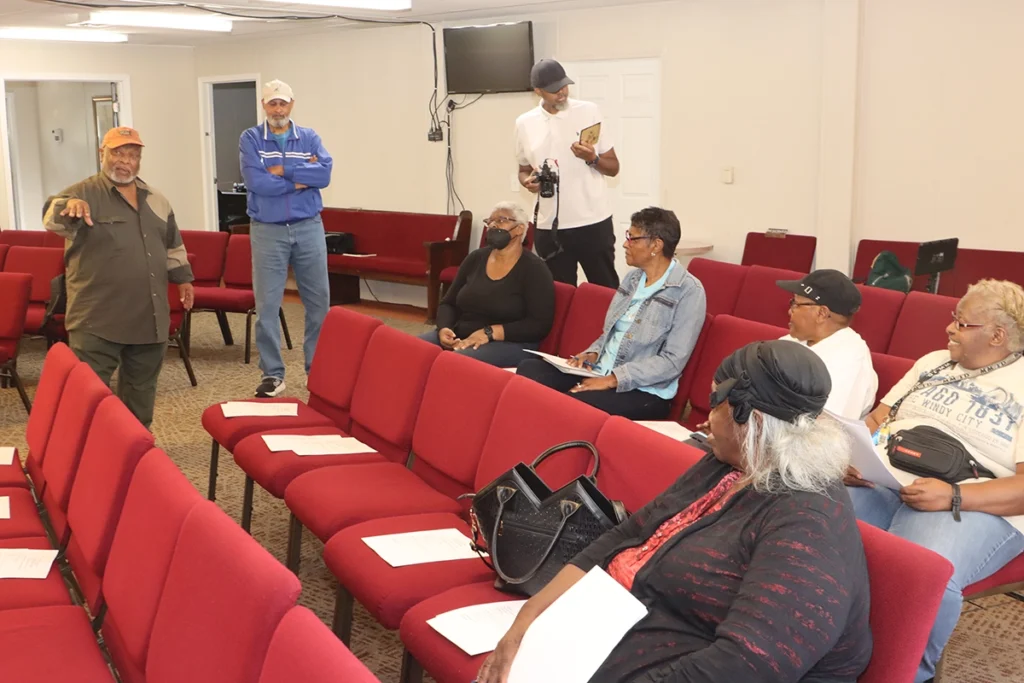
On a crisp autumn morning recently, a group of lifelong residents gathered at the Shiloh Methodist Church of Lovejoy to discuss saving the church’s graveyard where local black residents, including slaves, have been laid to rest for more than 100 years.
“You know, some of the families that are still living here (have relatives) … that are buried in the graveyard,” said Rev. Gail Ortega, leader of the effort to clean up and save the graveyard. “This is the southernmost part of Clayton County. Once you get near the racetrack, you’re starting to enter in a whole ‘nother county. So we’re right at the edge.
“I mean, for our time, that’s fairly recent, that we see these paved roads and lights. McDonough was just a dirt road. Panhandle was a dirt road. All this was just dirt roads.”
“Wasn’t no street road. And nobody never bothered us, and we didn’t bother anybody else,” said Betty Westmoreland, a 79 year old Lovejoy resident.
The KKK & Moonshine
As late as the 1990s, the Ku Klux Klan held frequent rallies in Clayton County where they would march down Tara Boulevard in their white robes and pointy dunce caps.
“We saw the light. They had the torch,” remembered Joyce Johnson. “They were marching and going to a house that they used to go to have meetings. We would hide in a ditch in North Joy.”
“They would come out there, but they wouldn’t come up in our yard. They would come at the road out there,” said Westmoreland.
There was a simple reason the KKK didn’t bother the family. Westmoreland’s father was a part-time bootlegger. But not just any bootlegger. He was making moonshine at the behest of the county sheriff, who told the KKK to leave him alone.
“(The Sheriff) told them, “don’t mess with him,” added Johnson. “We had a cousin come from Atlanta. He would haul it back to Atlanta, even to the police,” said Westmoreland.
“It was an agreement, an understanding. And with the understanding came the sheriff’s protection and the respect of the other white folks who were Klan and also drinking the bootleg,” said Rev. Ortega.
The Long Road to Education
Getting an education was quite a task because south Clayton County only had what was called the “old school,” which didn’t go any further than the seventh grade. “It was a two sided room. It wasn’t where you could go through to the next room. You had to step out and go over into that room,” said Johnson. “They used those two rooms for Ms. Evie Arnold and Ms. Evelyn Brown.”
Ms. Arnold, who taught sixth grade, is descended from one of the most prominent black families in Clayton. John William Arnold, a farmer, and his wife, Sarah, campaigned to have a school built in south Clayton during the 1930s, the old school, and in 1963 J.W. Arnold Elementary School located in Jonesboro, opened its doors to the county’s African American students. The school is named in honor of John’s father. It would remain segregated until Clayton County Public Schools integrated in 1968.
But getting to Jonesboro for school was still a challenge for kids in south Clayton. Many missed school because they had to help the family chop cotton. Schoolkids had to hike to the main road and catch a bus to the school. Luckily, the woman at the end of the road always let the kids into her house while waiting for the bus.
“So in order for us to get to school, even though we had a car, my parents had to go to work really early,” said Lilli Calloway. “So we had to walk all the way up this road to catch the bus every day. So we could go to her house and somebody was looking out the window to see if the bus would come. And then we run across the road to catch the bus.”
Westmoreland started high school after integration at Jonesboro Senior High, but she still had to take the bus to Jonesboro from the 8th through the 12th grades.
“We had to come out of that school, then catch the bus and go to Forest Park. And from Forest Park, 9th grade up until the 12th grade, that’s where I went,” she said.
School took a backseat to family many times. As the oldest, Betty had to mind the other seven kids. “ A lot of time I had to stay out of school because I’m the oldest one. I had to take care of … the rest of the seven. So washing and taking care of those who weren’t in school yet,” said Westmoreland.
Westmoreland many times had very little to feed the family except for pinto beans, a food that still brings a scowl to her face.
“Pinto beans for lunch. Pinto beans for supper. Pinto beans!” exclaimed Westmoreland. “We had a bucket that we would fill up with pinto beans and cornbread. We would bring it to the cotton field for my dad, then go back home and fix dinner for when they get off.”
The Dead Lie Uneasy
When the county finally got around to paving Panhandle Road, a sidewalk and water line were also installed. Beyond the water line, a dense wooded area with an almost impenetrable walls of weeds rests behind Lovejoy High School. For years, no one paid attention to the plot of land. Then, one morning, a local man was walking his dog down the pristine sidewalk when the pooch suddenly rushed into the thicket.
What he found would shock the Shiloh community.
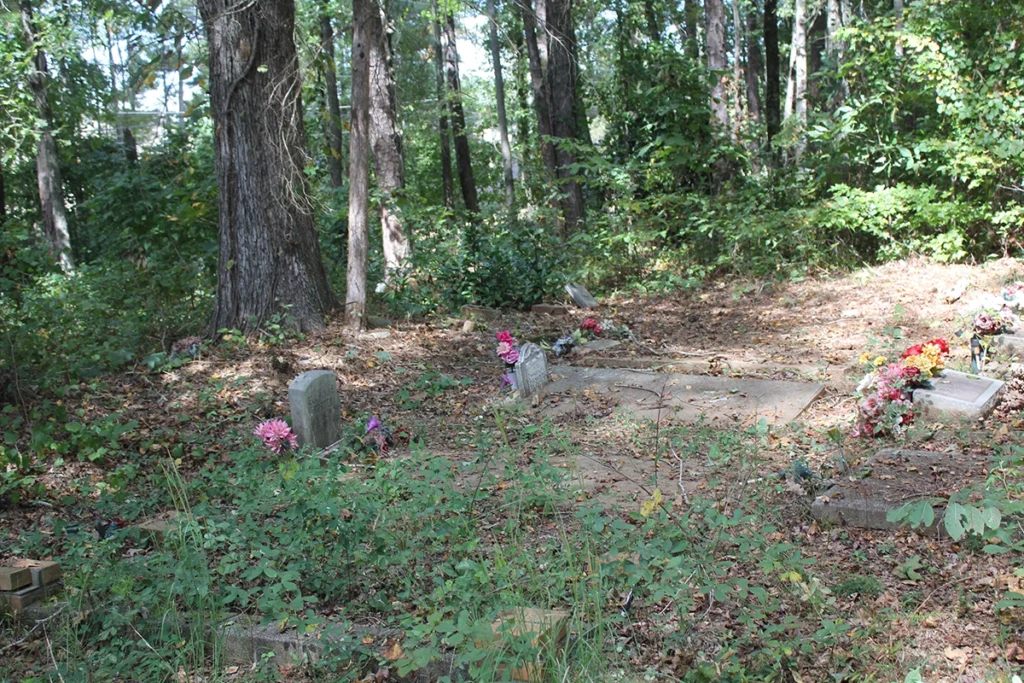
“There were actual skulls,” Rev. Gail Ortega said.
Apparently, the newly paved road ran over the old graveyard and construction unearthed the bones of forgotten Lovejoy residents. The church is now conducting a GoFundMe account to raise the $10,000.00 needed for initial cleanup and around $60,000.00 for full restoration. Donations are accepted independently. Send to Shiloh of Lovejoy, Inc., P.O. Box 494, Lovejoy, GA 30250 or contact Rev. Gail Ortega at 650 353-6618.
The Great Migration didn’t happen to all south Clayton residents
When the depression of the 1930s took place, many black families moved away from the old plantations and many went into sharecropping. Gradually, families moved for economic gains or to get away from the strangling segregation that gripped the community for decades. A few survived and stayed in the community.
“You know, a lot of these lands move from plantations to farms. And a number of the families that have been on the plantations just migrated to the farms,” said Rev. Gail Ortega.
Joyce Johnson remembered that her father refused to leave his birthplace. “ A lot of them moved,” she said. “Our father, he was still here when a lot of them had moved. This houses that you paid like $25 to $35 a month for rental. My dad … was farming. He did a lot of farming.”
Cotton was still king for much of the 20th Century in Lovejoy. It was the dominant plant for sharecropping in fields that stretched hundreds of acres towards the highway.
“When you think about a cotton field the size of what was described to me going toward the freeway, that’s a lot of land,” said Rev. Gail Ortega.
Private gardens, however, kept the families in fresh fruits and vegetables. Betty Westmoreland said that the families grew everything, but her favorite was watermelon that she would eat in the middle of the field.
One of the biggest, if not the biggest, south Clayton landowner after World War II was Don Hastings, of Hastings Garden fame. He had a large garden growing all kinds of .vegetables that he would take into Atlanta to sell.
“My dad worked on Cheshire Bridge Road and then on another one,” said Betty Westmoreland. “He would go down there to take this food and stuff down there and they would sell it.”
Because there was no running water, families had to dig wells or send family members with a bucket to fetch water from a nearby spring. Johnson remembers getting up at 4am to get water and wash two loads of clothes and hang them on the line. She would go to school and by the time she got home the clothes were dried and ready to be folded.
Living the Best Life
Life may have been hard yet the families of south Clayton County but the kids didn’t know any better. They were living the best life possible.
“When we ate, we ate like we was eating Sunday dinner every day of the week. That’s how we used to eat,” said Calloway. “We ate three meals a day, like it was dinner. Big Sunday dinner. That’s how we ate.”
Sunday was the only day of the week where the families could socialize and play baseball. The local nine was called the Tigers.
“Some number of years later we decided, well, they are playing baseball so we gonna play softball. And we was the Tigerettes,” said Johnson. “We played through the weekend.”
Despite the discrimination, despite the obstacles that had to be overcome, Westmoreland does not want sympathy nor does she want revenge on those who harried and harassed her and her family for many years. She ignored it then and she ignores it now.
“As I came up, there was so much going on,” she said. “Because during the time when I was coming up, we, as being black people, we didn’t know nothing about being poor. We thought we was just as rich as the rich people were.”