
In Clayton County, housing is never just about walls, roofs, leases, or property lines. Housing is about whether a family can breathe, whether a young person has somewhere stable to return to, whether a resident has access to support when something breaks, and whether the organizations operating inside the county understand that their presence carries responsibility beyond the transaction.
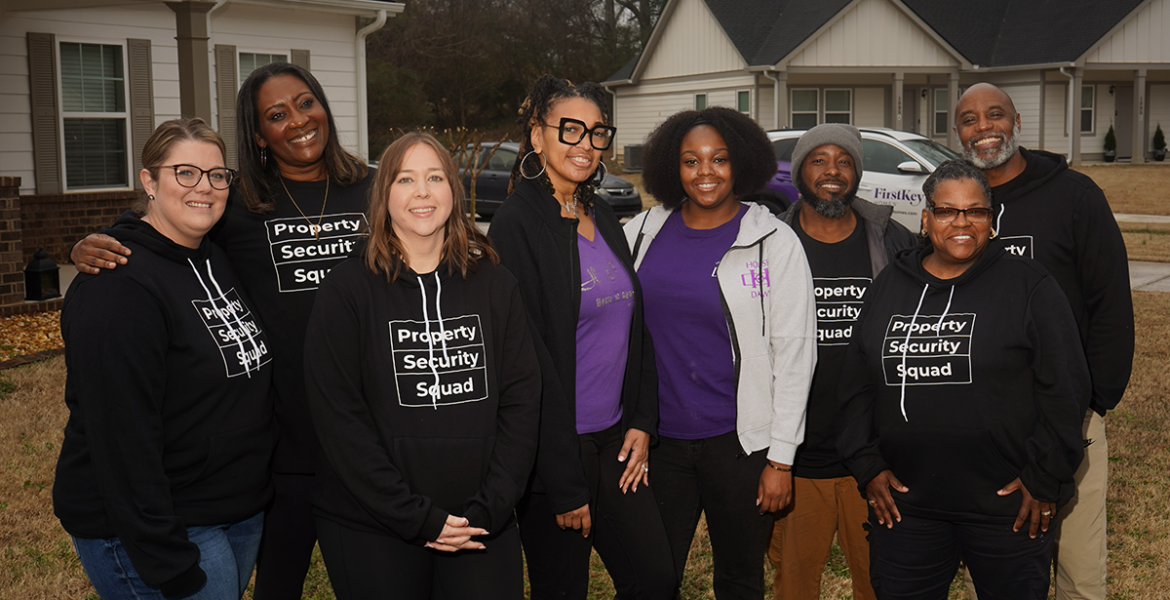
That was the larger story behind FirstKey Homes’ recent Day of Service at House of Dawn in Jonesboro, where a seven-member volunteer team from the company’s property security division spent time organizing housing supplies, creating order in storage areas, and helping prepare the environment for incoming residents.
House of Dawn is an independent living, transitional housing, and student housing organization that provides housing and supportive services to low- to moderate-income residents, essential workers, and workforce households. For organizations like House of Dawn, donated supplies and stocked storage areas are not background details. They are part of the everyday system that helps people move from instability into a more functional living environment. FirstKey Homes said its team sorted and arranged essential items such as toiletries, cleaning materials, and kitchen basics, while also consolidating duplicate items, removing outdated materials, and reorganizing the space so staff could more easily locate and restock what residents need.
The work may have looked simple from the outside, but service often lives in those practical details. A shelf that makes sense. Supplies within reach. A room that no longer feels crowded or forgotten. A storage system that helps staff move faster and welcome residents with less friction. According to FirstKey Homes, the goal was to help create “a more efficient, welcoming, and ready-to-use space” for new residents transitioning into their accommodations.
FirstKey Homes describes itself as a premier operator of quality single-family housing, headquartered in Atlanta and operating nearly 52,000 single-family homes across 29 U.S. markets, including nearly 500 homes in Clayton County. The company says its model is built around professionally managed homes, 24/7 maintenance, resident service, and long-term property management. It also points to a 4.6 out of 5 Birdeye rating and an A+ rating from the Better Business Bureau as part of its resident service record.
For Clayton County, the company sees the local housing landscape as an important part of the larger metro Atlanta housing picture.
“Clayton County stands out as a vital hub for attainable housing in the metro Atlanta region,” FirstKey shared, noting the county’s combination of suburban stability and proximity to major economic engines. The company says its role in that landscape includes providing dependable single-family rental housing, professional maintenance, and financial tools such as credit reporting, with a stated goal of giving residents a stable foundation for the future.
That language matters because Clayton County sits inside a growing regional conversation about affordability, rental demand, institutional ownership, and the pressure many families feel as wages struggle to keep pace with the cost of living. FirstKey acknowledged that renters in Clayton County are navigating a gap between stagnant wages and rising living costs. In response, the company said it supports residents through transparent pricing, professional maintenance, resident assistance programs, free financial coaching, identity protection, and the reporting of on-time rent payments to credit bureaus.
The company also said it launched a 2024 initiative to help residents who want to move from renting into homeownership. Through partnerships with third-party professionals in brokerage, mortgage, and title services, FirstKey says residents can receive support with financial counseling, credit readiness, mortgage education, closing support, and information about incentives such as down payment assistance and reduced closing costs.
Still, FirstKey’s presence in Clayton County exists within a broader national debate. Across the country, some residents have raised concerns about institutional ownership of single-family homes, especially in communities where affordability and neighborhood stability are already sensitive issues. When asked about those concerns, FirstKey said it aims to be part of the housing solution by providing clean, safe, well-maintained affordable rental housing that supports individuals and families. The company also connected housing access to school access, educational attainment, and long-term economic mobility.
In Clayton County, that responsibility is not abstract. A large rental operator’s choices can influence the day-to-day experience of neighborhoods, residents, schools, and local partners. FirstKey stated that community support and giving are part of its operational approach, and that it wants to help create strong communities where individuals and families can grow and thrive.
The Day of Service at House of Dawn was one visible example of that stated responsibility. FirstKey said its employees are offered volunteer time off, giving team members room to support causes that matter to them. While only seven volunteers participated in this specific effort, the company described the group as “small but mighty,” emphasizing that every employee has the ability to make an impact.
FirstKey also noted that it maintains relationships with a number of local and regional nonprofit organizations, including Hope Atlanta, The Sandwich Project, the Atlanta Community Food Bank, Trees Atlanta, Foster Care Support Foundation, and others. For future partnerships, the company said Clayton County organizations interested in working with FirstKey can contact giving@firstkeyhomes.com.
From FirstKey’s perspective, a successful community partnership is built through consistent acts of service that extend beyond a single event. “Every hour we volunteer, every skill we share, and every quiet act of kindness creates a ripple of impact,” the company shared in its response.
For House of Dawn, that ripple showed up in the form of order, preparation, and practical support. For FirstKey Homes, it was an opportunity to connect its housing footprint in Clayton County with a local organization already doing hands-on work for residents who need stability. For the broader community, the story raises a deeper question that WACM will continue to follow: what does responsible housing presence look like in Clayton County, and how do companies, nonprofits, public leaders, and residents work together to make sure housing remains connected to dignity, access, and long-term community strength?
In a county where housing is tied to family stability, workforce strength, education, economic pressure, and neighborhood trust, service days like this are one piece of a much larger picture. The real measure will be what continues after the supplies are sorted, the shelves are cleared, and the volunteers leave the room.